
If you are looking at the Greek Golden Visa in 2026, you already know the entry price went up. The minimum investment is now €800,000 in high density areas and €400,000 across the rest of the country. What many investors do not realise is that there is still a route into Europe’s best permanent residency for €250,000, and it is the one I help clients use almost every week.
That route is the commercial to residential conversion. Buy a qualifying conversion property, and you keep the €250,000 threshold instead of the higher tiers. It sounds almost too good, and that is exactly where the problem starts. The route is real, but the market around it has a pricing issue that very few people are willing to talk about openly. This post explains what that issue is, why it pushes prices up, and how to compare units so you are not the investor who overpays for the first brochure that lands in their inbox.
Why the €250,000 Route Still Exists
The €250,000 threshold survives only for one specific type of asset. You have to invest into a property that converts from commercial use into residential use. Regular residential apartments now sit in the €400,000 or €800,000 tiers depending on location. The conversion category is the exception the law still allows at the lower number, which is why every cost conscious investor gravitates toward it.
The catch is on the supply side. Conversion permits are slow and difficult for developers to obtain. A developer cannot simply label any commercial building a Golden Visa conversion. The paperwork, the zoning, and the approvals take time, so the volume of genuinely compliant €250,000 units reaching the market is far smaller than the demand chasing them.
The Supply and Demand Squeeze Nobody Mentions
The Greek Golden Visa has become one of the most popular residency programmes in the world, with close to 10,000 families applying every year. Put that level of demand against a thin supply of compliant conversion units and the result is predictable. Prices rise. Units sell out in the early stages, frequently before construction is even finished.
This creates a quiet distortion. The €250,000 conversion units often carry inflated price tags compared to what the same square meters would cost on the open Greek market. Most clients accept this because they are buying for the residency, not for the property itself, and they want to commit the absolute minimum. That mindset is understandable, but it is also exactly what lets overpriced stock move so easily. You want to spend as little as possible, yet you also do not want to hand over more than the asset is worth. Both things can be true at the same time, and balancing them is the whole game.
Why Shopping Around Usually Backfires
Here is the structural problem with the way most investors research. When you start comparing options, you end up talking to real estate developers directly. Every one of them has an obvious incentive to sell their own stock. They are not lying to you, but they are never going to tell you that the project three streets over offers better value per square meter or a stronger rental potential. You are getting a sales pitch dressed as advice, repeated across five or six conversations, and no single source is giving you the whole market.
That is the reason I built an independent database instead of relying on developer brochures. I have no affiliation pushing me toward one project over another, so the comparison stays honest.
What Actually Matters When Comparing Units
To compare conversion units properly, you cannot just look at the price. I mapped every qualifying unit against the parameters that genuinely affect the decision:
- Developer and project name
- Location
- Unit type
- Completion date
- Price
- Square meters
- Price per square meter
- Furnishing
- Rental guarantee options
Price per square meter is where most of the overpaying hides. Two units at the same headline price can differ wildly once you divide by floor area, and a rental guarantee that looks generous on paper can be short in duration or low in annual yield. Looking at these side by side across the whole market, rather than one brochure at a time, is what separates a sound investment from an expensive one.
How I Rank the Whole Market
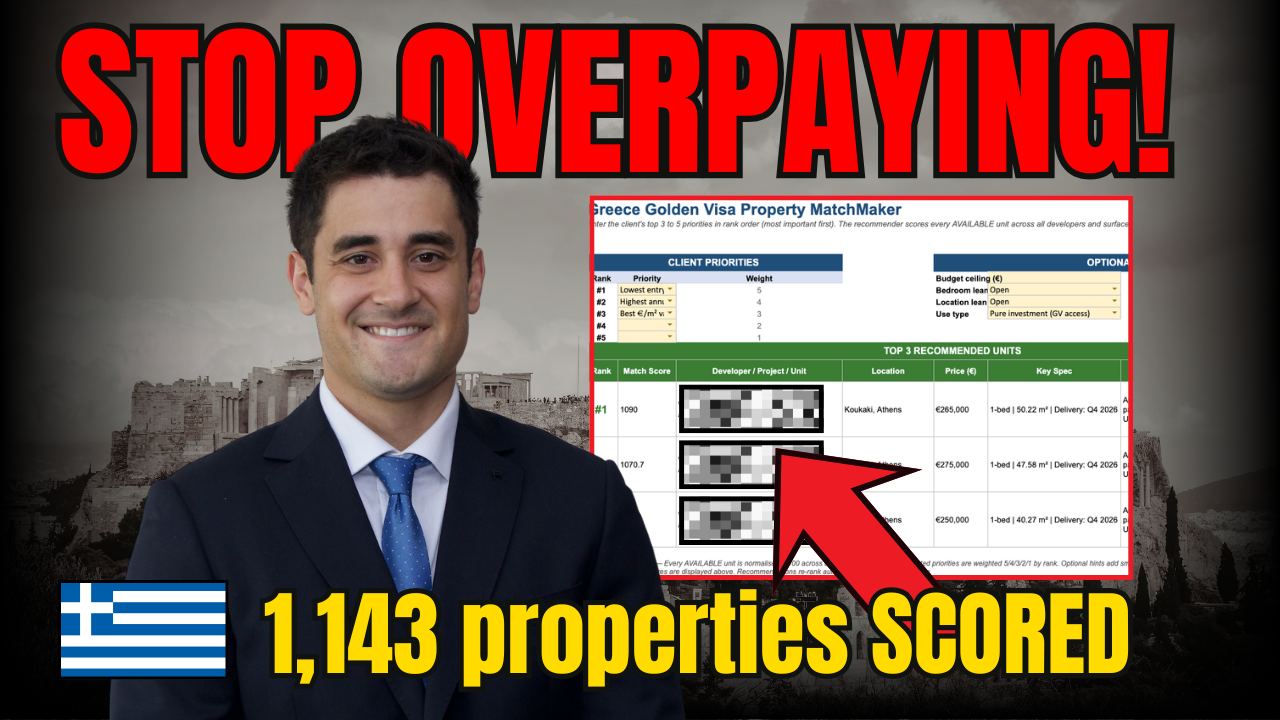
Comparing raw parameters is useful, but different investors want different things. So on top of the database I built a matchmaker that scores every unit across ten drivers:
- Lowest entry price
- Best value per square meter
- Highest annual rental guarantee
- Highest upfront rental payout
- Longest rental guarantee
- Largest total area
- Most outdoor space
- Fastest delivery
- Most premium location
- Most established developer
You rank your top five priorities in order of importance, and the system runs through every compliant unit to surface the three projects that fit your specific situation. It removes the guesswork and replaces it with a transparent shortlist built around what you actually care about, not around what a developer wants to sell that month.
How to Access the Database
The full database holds a large amount of sensitive developer information, so I cannot publish the raw file openly. What I have done is release a simplified version of the matchmaker on my site that gives you basic, non-sensitive recommendations to experiment with. Try the lite version below:
For the full, unrestricted version, the process is simple. I am a qualified investment migration advisor working directly with most of the largest Greek developers. Answer a few quick questions on my form, then book a free call. Once I understand your situation, we run your priorities through the matchmaker together, walk the whole market, and only then do I release the full project detail. The goal is straightforward. Get you and your family the best permanent residency in Europe through a real estate investment that makes sense, instead of overpaying for the first option you happen to find.
The Takeaway
The €250,000 conversion route into the Greek Golden Visa is still open, and it is still the most accessible path to permanent residency in Europe through property. The risk is not the programme, it is the price you pay inside a market where demand far outstrips supply and every seller is pitching their own stock. If you know which parameters matter and you can see the full market at once, you protect yourself from overpaying. That visibility is exactly what an independent database gives you, and it is the difference between an investment you are happy with for years and one you regret the moment you compare it to what was sitting one project over.
Frequently Asked Questions
Is the €250,000 Greece Golden Visa still available in 2026?
Yes, but only for commercial to residential conversion projects. Standard residential property now requires €400,000 in most of the country and €800,000 in high density areas. The €250,000 figure applies specifically to qualifying conversions.
Why are €250,000 conversion units more expensive than the regular market?
Conversion permits are slow and difficult for developers to secure, so the supply of compliant units is limited. With nearly 10,000 families applying each year, high demand meets thin supply and prices on these units often sit above comparable open market property.
How do I know if a unit is fairly priced?
Compare price per square meter rather than headline price, and weigh the rental guarantee by both its annual yield and its duration. The most reliable way is to view the full set of compliant units together rather than judging one developer’s brochure in isolation.
Can I trust a database built by an advisor?
The value of an independent database is that it is not tied to selling any single project. Because there is no affiliation pushing one developer over another, the comparison stays neutral and you see the whole market on equal terms.