
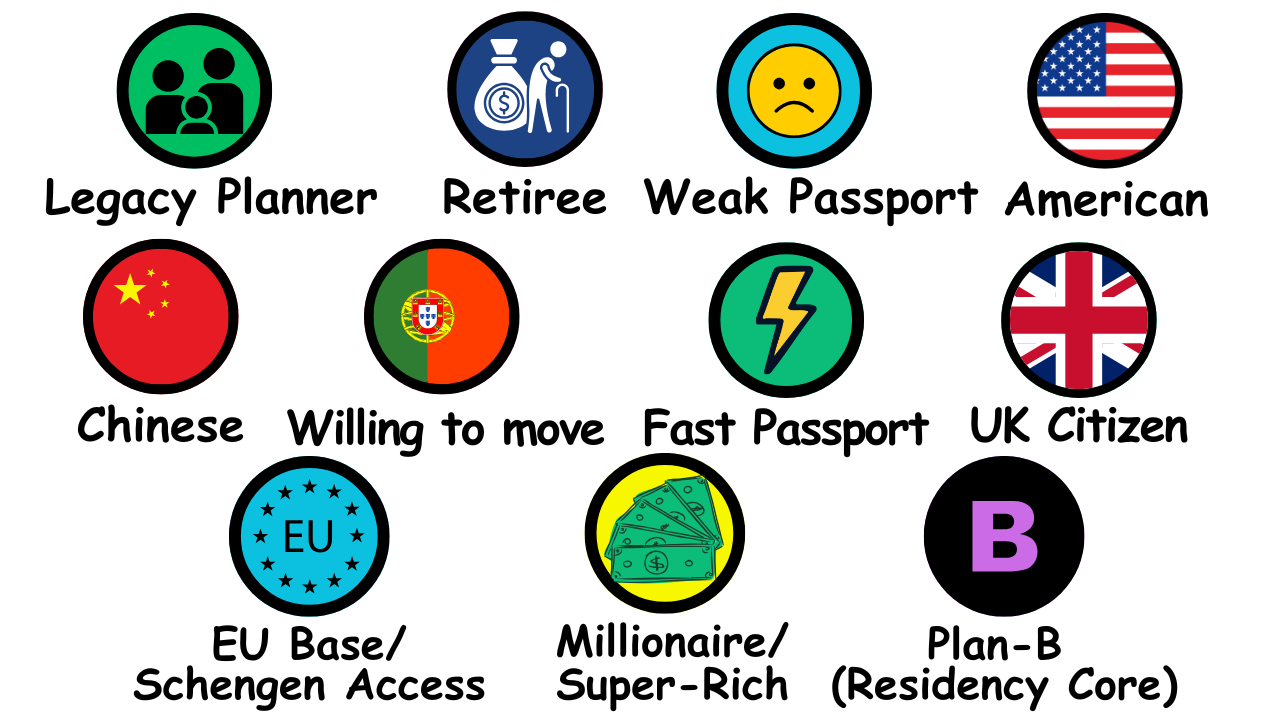

If your only reason for wanting a Portugal Golden Visa was a fast European passport, the math has changed, and not in your favour. Portugal’s revised Nationality Law is now published and in force. For most non European applicants, the road to citizenship is no longer five years. It is ten. Seven for citizens of the EU and Portuguese speaking countries.
That headline has sent a lot of investors into a panic, and some of that panic is justified. But a good portion of it is people reacting to a change they have not actually understood. So let me do something more useful than repeat the news. I will tell you exactly who should walk away from the Portugal Golden Visa right now, who should absolutely still consider it, what genuinely got worse, what did not change at all, and the one feature in this programme that makes the longer timeline far less painful than the headlines suggest.
What Actually Changed in Portugal’s Nationality Law
The detail matters here, so let me be precise. Parliament voted on the first of April to extend the standard naturalisation period from five years to ten for most foreign nationals. For citizens of EU and Portuguese speaking (CPLP) countries, it is seven. The President signed it on the third of May, and it has now been published in the official gazette and entered into force. This is no longer a proposal. It is the law of the land.
There is a second change that almost nobody is talking about, and it matters just as much. The clock that counts toward your citizenship now starts from the date your residence card is issued, not from the day you submit your application. If you know anything about Portugal’s immigration agency and its backlog, you know that gap has been very considerable for many people, especially those who applied between 2023 and 2024.
One honest caveat. A collective legal action has been filed by several hundred Golden Visa holders arguing that changing the rules midstream undermines the legitimate expectations of people who already invested. I hope it leads to some protection. But decisions should be made on facts, not on hopes. Plan for ten years. If protections arrive, treat them as a bonus.
Who Should Walk Away From the Portugal Golden Visa
I am not going to dress this up. If your entire reason for choosing Portugal was speed to a passport, Portugal has lost some of its shine. The five year sprint to an EU passport was a genuine selling point, and it is gone for most applicants.
If that describes you, the smart move is not to give up on the idea of a second citizenship. It is to compare Portugal honestly against the alternatives. Greece, Malta, and Italy all have their own logic, and depending on your nationality, your budget, and how much time you are willing to spend in country, one of them may now serve you better than Portugal does. The worst thing you can do is anchor on Portugal out of habit when the single feature you were buying no longer exists.
Download the free 2026 Portugal Golden Visa Guide, updated to the published law (49 pages). Get the guide →
The Feature That Changes the Entire Decision
Here is the part the headlines skip, and it is the part that matters most. The change is to the nationality law. It is not a change to the Golden Visa programme itself. Let me be very precise about what did not move. All the investment routes are still open. The famous seven day per year physical stay requirement is unchanged.
And then there is the feature that changes the emotional weight of the whole decision. At year five, you can still divest. You can recover your invested capital and keep permanent residency, holding that permanent residency on the same light seven day per year rule, all the way until your citizenship eligibility arrives. Your money does not have to sit locked up for ten years. It comes back to you at year five. From that point you are simply holding a permanent residency, with full rights to live, work, study, and travel across Schengen, while the citizenship clock runs quietly in the background.
That is the distinction the panic misses. The timeline to the passport got longer. The timeline your capital is committed did not.
Who Should Still Apply, and Why
Three groups should still seriously consider Portugal.
First, anyone who actually wants to spend real time in Portugal, or eventually relocate. For you, the citizenship timeline was never the main event. The life in Portugal was. A longer naturalisation period is less impactful when you are building a life in the country anyway.
Second, anyone who simply does not mind whether the passport arrives in year five or year ten, because what they are really buying is the Plan B. The security. The optionality. The freedom to move if life back home turns. For this investor, the residency itself delivers most of the value, and the passport is the long tail.
Third, families thinking generationally, where a citizenship that passes to your children is worth the wait regardless of whether it lands in five years or ten.
For all three, almost nothing about why Portugal is special has actually changed. You still get one of the strongest passports in the world at the end of it. You still get an EU citizenship that opens twenty seven countries. And you still get there on a stay requirement no other European programme can match.
This is the point worth sitting with. Portugal is the only country in Europe that lets you naturalise through the Golden Visa without physically living there. Other Golden Visas may ask for zero days per year to keep the residency, but the moment you want the passport, you have to actually move and live there for seven to ten years. Portugal does not ask that of you. That advantage survived the reform completely intact.
So Which Investor Are You
The honest question to ask yourself is which of these investors you are. If you are the passport in five years investor, reassess, and compare your options properly before committing. If you are any of the other three, the case for Portugal is very much intact. You simply need to plan around a longer horizon, and understand that your capital is still freed at year five regardless.
That is the whole message. The law passed. Portugal lost some appeal for the pure citizenship hunter, and it kept almost all of its appeal for everyone else. The work now is matching your real motivation to the right programme, rather than reacting to a headline.
Book a free, no obligation strategy call to map your own situation. Schedule your call →
Frequently Asked Questions
Did the Portugal Golden Visa programme itself change?
No. The reform was to the Nationality Law, which governs citizenship by naturalisation. The Golden Visa residency programme, its investment routes, and the seven day per year stay requirement are unchanged. What changed is how long you must hold residency before you can apply for a passport.
How long does it now take to get Portuguese citizenship through the Golden Visa?
For most non EU nationals, ten years of legal residence. For EU citizens and nationals of Portuguese speaking (CPLP) countries, seven years. The count now begins from the date your residence card is issued rather than from your application date.
Can I still get my investment back early?
Yes. At year five you can divest and recover your invested capital while keeping permanent residency. You hold that permanent residency on the same light stay requirement until you reach citizenship eligibility, so your money is not locked up for the full ten years.
Does my existing Golden Visa residency time count toward the new ten years?
This is currently disputed. The statute is silent on it, and a collective legal action by several hundred Golden Visa holders is challenging the change. Until there is clarity, the prudent approach is to plan around the new timeline and treat any protection as a bonus.
Is Portugal still worth it compared to Greece, Malta, or Italy?
It depends on what you are buying. If you want speed to a passport, the other programmes deserve a serious look. If you want EU residency with the lightest stay requirement in Europe, the option to live in Portugal, and a citizenship that passes to your children, Portugal remains uniquely strong even after the reform.
If you want to map your own situation against the current law rather than the headlines, the 2026 guide is the most complete resource I know of on the programme as it stands today, and a strategy call is the fastest way to get a clear answer for your circumstances.